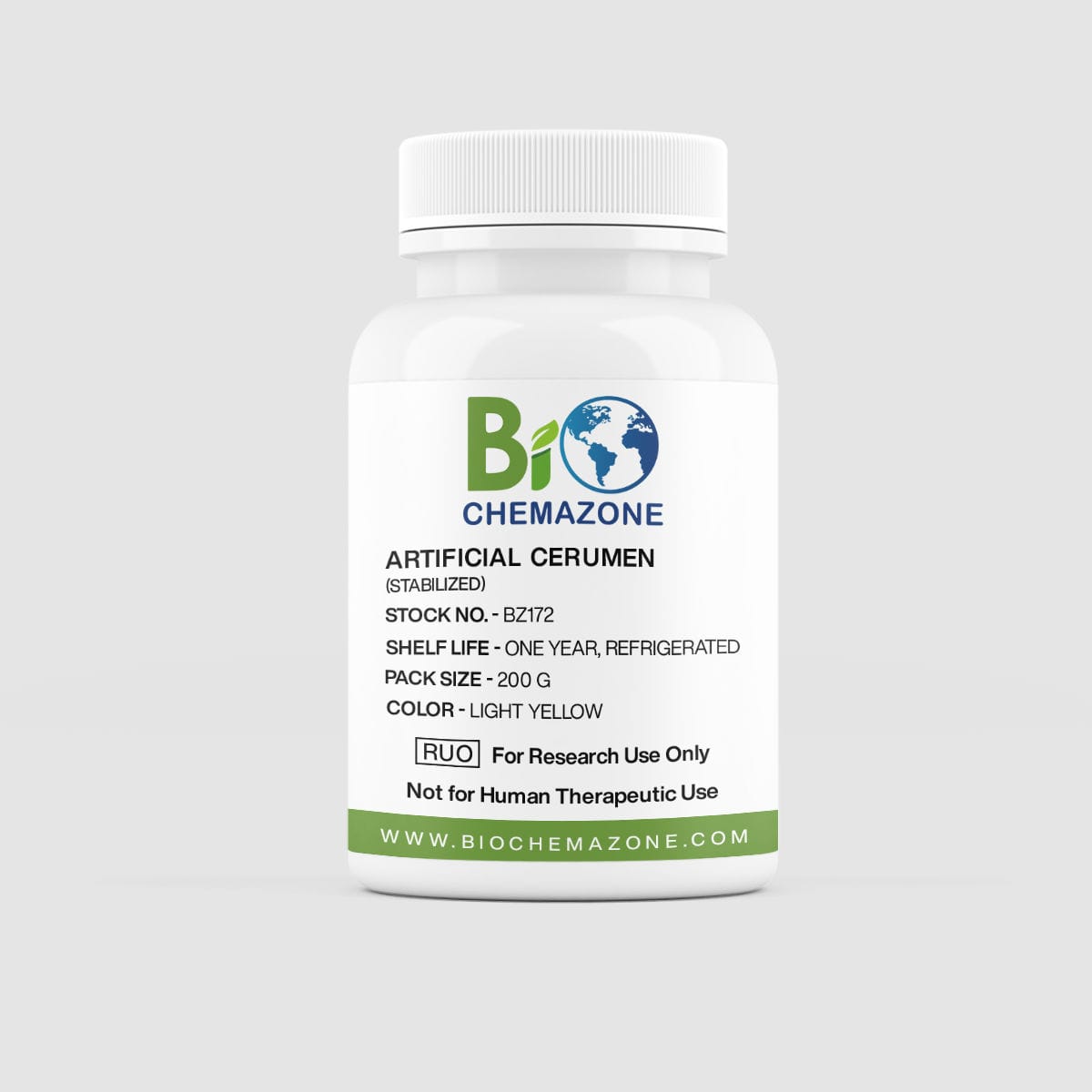
Artificial Cerumen (Stabilized) or Synthetic Earwax 50g (BZ172)
₹22,999.00 – ₹67,999.00Price range: ₹22,999.00 through ₹67,999.00
Simulated Cerumen (Artificial Ear Wax)
Simulated Cerumen, also known as Artificial Ear Wax, is a laboratory-formulated substitute designed to replicate the physical and chemical properties of natural cerumen. In the human ear, cerumen plays a vital role in protecting and lubricating the ear canal while trapping dust, debris, and dead skin cells.
Biochemazone™’s Simulated Cerumen is specifically developed for research and product testing applications, including performance evaluation of hearing aids, earbuds, earplugs, and other in-ear electronic or medical devices. It provides a reliable and reproducible medium for laboratory simulations of real-use ear canal conditions.
Key Features
- Realistic composition mimicking natural ear wax
- Consistent viscosity and texture for standardized testing
- Sterile and ready-to-use formulation
- Available in both liquid and semi-solid (ointment-like) textures
- Light yellow appearance
Physical Properties
- Color: Light Yellow to Dark Yellow Brown
- Appearance: Liquid (also available in semi-solid texture upon customized request)
- Shelf Life: One year (when refrigerated at 4°C)
- Storage Condition: Refrigerate at 4°C
- Transportation Condition: Can be safely transported at room temperature
Main Components
- Oleic Acid (pure)
- Linoleic Acid (pure)
- Lanolin (anhydrous)
- Palmitic Acid (pure)
- Myristic Acid (pure)
- Paraffin Oils
- Stabilizers
Applications
- Hearing aid durability and clogging tests
- Earbud and earphone performance testing
- Acoustic device validation
- Material compatibility studies
- Research and development of in-ear technologies
Available Pack Sizes
Important Notes
- Product is sterile and ready for direct laboratory use.
- Store at 4°C; transport safely at room temperature.
- For professional scientific research use only. Not intended for clinical diagnosis, treatment, food, or pharmaceutical applications.
- Proper laboratory safety practices must be followed, including wearing a lab coat and disposable gloves.











 or Synthetic Earwax 50g (BZ172))